
Phenolic vs Acrylic Labels
Phenolic labels and tags have long been used in industrial settings for their durability and resistance to extreme conditions. Today, modern acrylic-based engraving stock has largely taken over that market, being used in everything from warehouse signage to OEM equipment tags.
In this guide, we'll break down the differences, explore their applications, and help you decide which material suits your needs best.
Fact is, the vast majority of "Phenolic Labels" in the field are actually made from an Acrylic Based Plastic Engraving Stock.
Advantages of Acrylic Engraving Stock
- Typically 1/16" thick
- Front engraved with Your Text
- 3M Peel and Stick Adhesive Applied
- Ships next business day, great price
- Use Indoors or Outdoors
- Stock availability
- Allows detailed engraving for logos and diagrams
Phenolic Labels in High-Voltage and Mil-Spec Applications
While acrylic-based engraving stock dominates most modern labeling needs, phenolic labels remain a go-to choice in specialized markets, particularly where very high voltages are involved. Both phenolic and acrylic engraving stock are electrical insulators, so either works for typical electrical panel labeling. Phenolic is usually chosen when a specification calls for it by name, or when a rigid, heat-resistant thermoset is needed in environments like electrical substations, power plants, or high-voltage switchgear.
For example, phenolic nameplates are often specified in military or aerospace applications under MIL-SPEC standards, where the material is dictated by the specification. However, this comes at a cost: phenolic's higher price, longer lead times (often 2-4 weeks), and lack of UV stability limit its use to indoor, high-stakes scenarios. If your project involves high-voltage systems, consult your engineer to confirm phenolic's necessity—otherwise, acrylic's versatility might still win out.
Comparison of Acrylic and Phenolic Labels
| Standard Plastic | Heavy-Duty Plastic | Phenolic | |
|---|---|---|---|
| Price | Low | Moderate | High |
| UV stable for Outdoor Use | Yes | Yes | No |
| Online Ordering | Yes | Yes | No |
| Detailed Engraving | Yes | Yes | No |
| Stock Colors | 13 | 6 | 4 |
| Temperature range | Good | Better | Best |
| Chemical Resistance | No | Yes | Yes |
| UL Recognized Material | – | Yes UL File E354751 | – |
| Wear Resistance | Good | Best | Good |
| Flexibility | Flexible | Somewhat Flexible | Very Rigid |
| Edges | Square | Square | Beveled |
| Engraving Method | Laser | Laser | Rotary Tool |
| Mounting Method | Peel and Stick or Fasteners | Peel and Stick or Fasteners | Fasteners |
| Lead Time | Next business day | Next business day | 2-4 weeks minimum |
Popular products
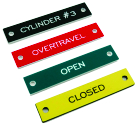
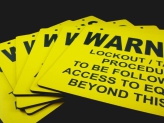
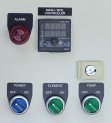
Below are some of our most popular products. Click on one to see how easy it is to customize online.
Try it now!
It's easy and free. No signup is required.
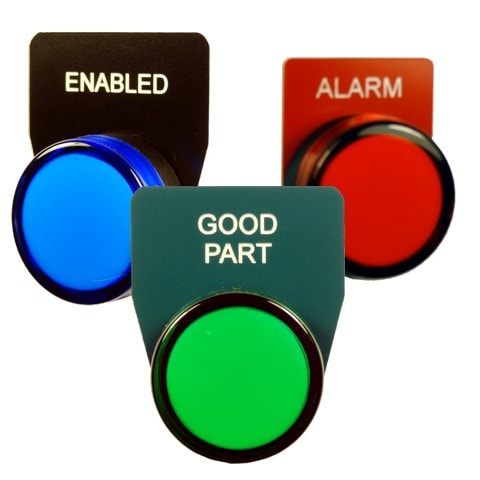
Choose Acrylic Plastic
Over 99% of the items we ship use acrylic plastic engraving stock. Perfect for:
- General Manufacturing
- Warehouses
- Indoor or Outdoor Use
- OEM Applications
- Marine and RV
- Many, Many More!
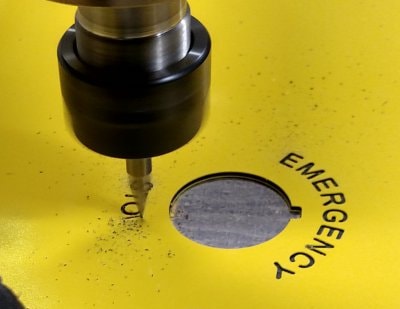
Rotary engraving a phenolic nameplate.
Choose Phenolic
- Very High Temperatures
- Extreme Chemical Resistance
- Required by Specification
- Mil Spec
- Indoor Use Only